Receive our newsletter
Keep in touch. Enter your details here and you won’t miss a thing.
Newsletter Sign UpRoyal Navy Airlifts Historic Cannons from St Michael’s Mount
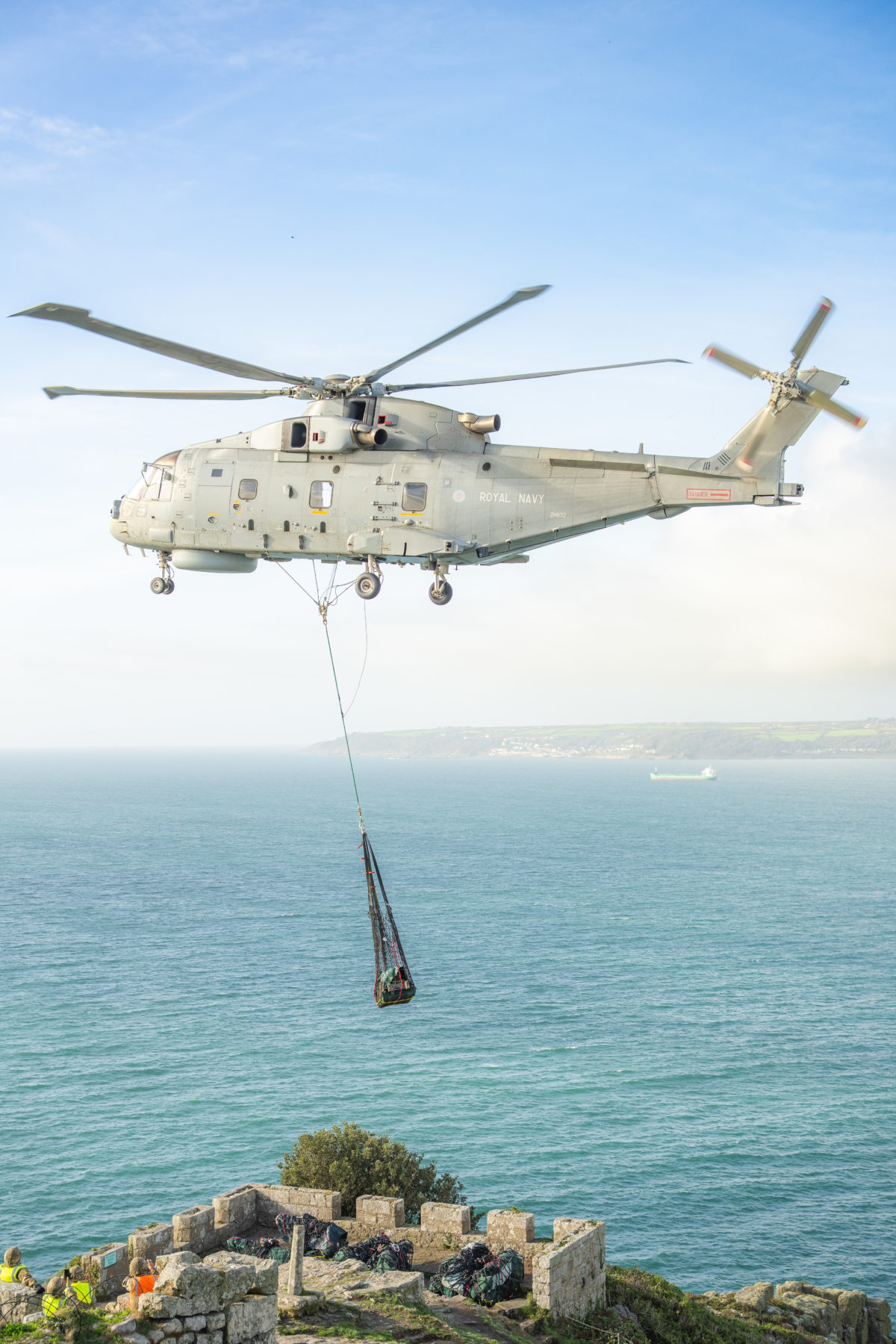
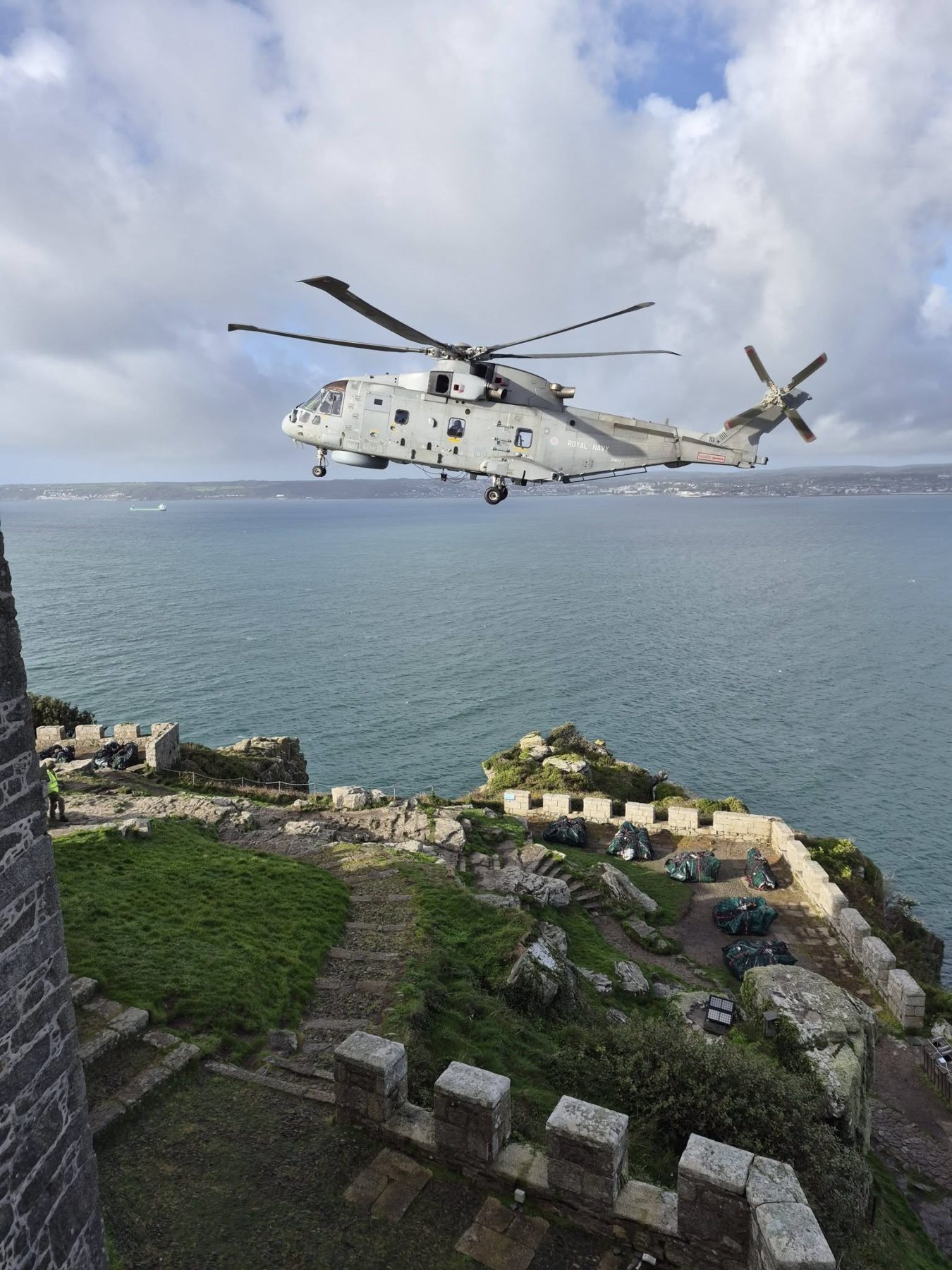
Eighteen historic cannons have been airlifted from St Michael’s Mount by the Royal Navy in a carefully coordinated operation to support their conservation and restoration.
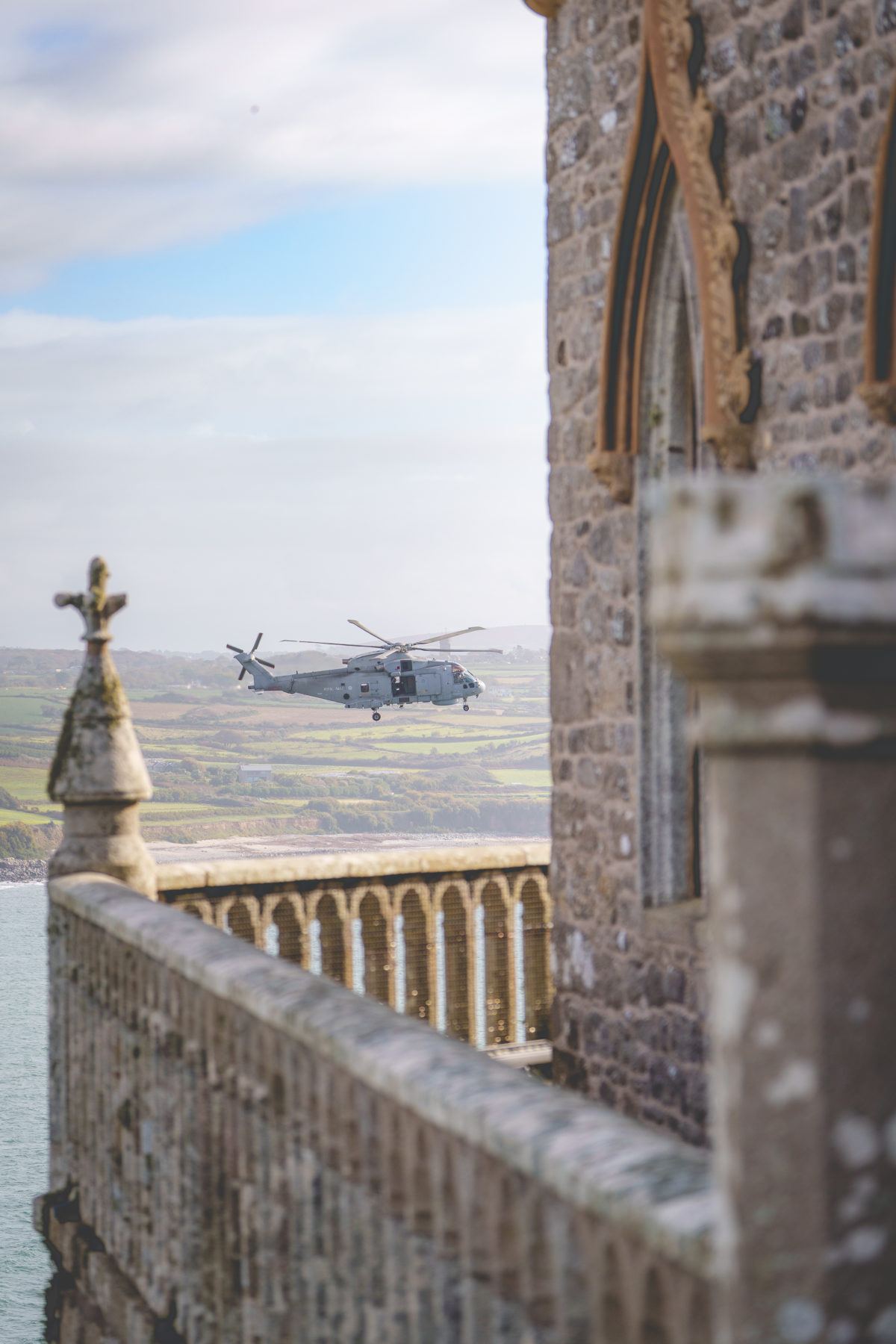
On Wednesday 14 October, a Merlin Mk2 helicopter from Royal Naval Air Station Culdrose transported the cannons, some weighing up to half a ton, from the island's castle across Mount’s Bay to the mainland. The operation, named Cormoran’s Throw, saw each cannon carefully lifted beneath the helicopter and transported to Folly Field Car Park in Marazion, ready for onward travel to specialist restorers.
The cannons are an important part of the Mount’s history, and their removal marks the first stage of essential conservation work to protect them for future generations.
Henry Mathews, Head of Land and Property at St Aubyn Estates, which manages St Michael’s Mount in partnership with the National Trust, said:
“These cannons are an important part of St Michael’s Mount’s story. Their removal is the first step in specialist work to conserve them for the future, and we are grateful to the Royal Navy for its support.”
The cannons will undergo specialist restoration at Dorothea Restorations before being returned to the Mount. Initial examinations suggest that all 18 cannons are English, with three bearing crests believed to date from the reign of King George II (1727–1760). Over the centuries, exposure to salt spray and the coastal environment has caused corrosion, making conservation work essential to their long-term preservation.
The airlift was carried out by Atlantic Flight, part of the Royal Navy’s 814 Naval Air Squadron, known as The Flying Tigers. As well as supporting the Mount’s conservation work, the operation provided valuable training for the helicopter crew.
Commander Ben Kerley, Commanding Officer of 814 Naval Air Squadron, said:
“Transferring stores or equipment between ships or from ship-to-shore is one of the core capabilities of the Merlin helicopter. It is something our crews regularly practise at Culdrose. So to carry out this exercise in a realistic setting has been a real benefit to the crew as they prepare for operational service. It also supports the preservation of this important historic collection.”
The operation's name, Cormoran’s Throw, takes inspiration from the legend of Cormoran, the giant said to have created St Michael’s Mount. According to local folklore, Cormoran and his fellow giant Trecobben, who lived at Trencrom near St Ives, would entertain themselves by hurling enormous boulders at one another.
The successful airlift marks an important step in safeguarding the Mount’s historic cannons, ensuring they can be conserved and returned to their island home for future generations to discover.